The Fairy of Destruction
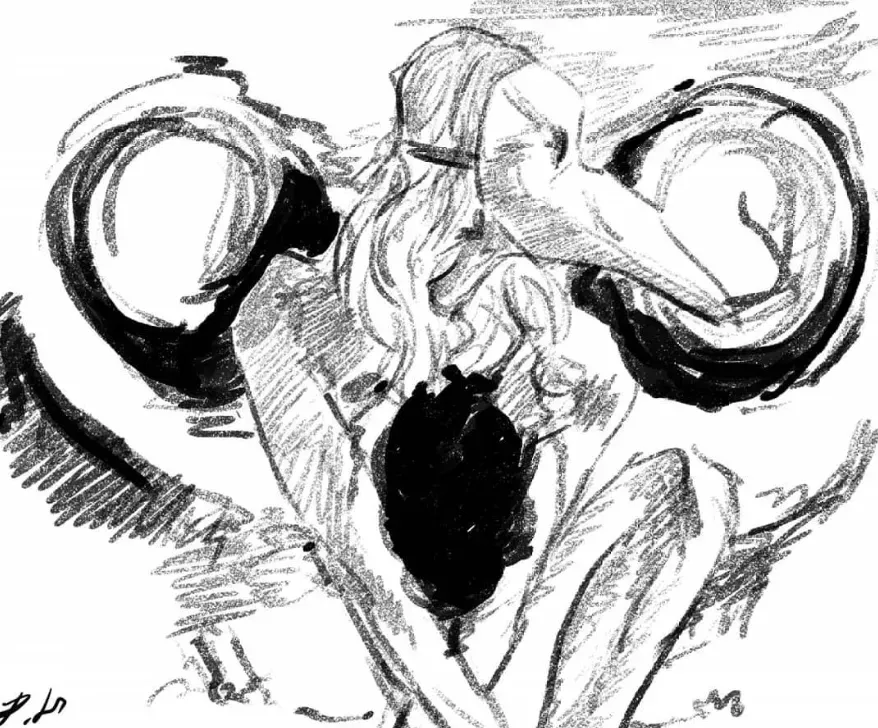
There was a first wave, one full of danger, without sound, without smell, invisible. The wave came from a deep cave inside the mountain, fast, reaching buildings covered in red paintings, walls filled with art, rituals, and symbols left by those who lived there. Their bodies began to fill with red dots, blood trapped inside, micro explosions under the skin. Their bodies shifted between extremes, internal cold, adrenaline, but also fever. This state, in each of them — animals, children, adults — caused panic. Some ran seaward while suffocating, collapsing unconscious along paths destroyed by bodies moving in the same direction.
The second wave came from the sky. Pale flakes descended, clinging to the skin, sticking to clothes, hair, faces. Birds came down with it, striking the ground, breaking against stone and flesh, leaving blood smeared across the roads.
“Yes, this is the perfect image,” she whispered.
The eyes of those trapped, unable to scream, staring in submission. Some felt anger, others worry, all of them fear.
The next wave melted them.
“They are one with nature again, I am so happy for them,” she thought.
Watching everything from a tower shaped into the mountain, outside the direction of the disaster. On its surface, she had etched her name and her image, imitating the art of the people she had chosen to destroy. She hummed, danced, felt so light that without thinking, she lifted into the air, a flower in the wind.
But this flower felt turbulence. The image of one inhabitant remained in her mind, and she could not understand why. A child had been trapped beneath the pale weight, stepped on by others fleeing blindly. He looked toward the sea, and when the end arrived, he felt peace. His body, shaped by cruelty, finally rested.
The fairy felt irritation and sadness, a brief disturbance while levitating. She etched this soul into the tower, and into her heart, carrying it with her as memory.
Author’s Note
This story is inspired by the tragedy of Pompeii, where it later became possible to see how people met their deaths through the volcano, trapped on an island in a single, irreversible moment. I was drawn to the image of lives interrupted and preserved at the point of collapse, bodies and gestures fixed by catastrophe.
Another important inspiration was the manga Bibliomania by Orval. What stayed with me was a character who acts as a kind of library or archive of people, a figure that preserves human lives through obsession. In this story, that idea becomes more supernatural, evolving into a deity with absolute power: a being that controls nature and catastrophe, whose actions cannot be stopped or altered. Its cruelty is definitive.
What matters to me is not redemption or justice, but the possibility that something remains. Even when destruction is total, this figure keeps stories and souls, carrying the weight of what it erases. The smallest trace of hope I allow myself lies there: in the preservation of memory, especially of those who suffered most, like the child whose life ended without mercy. If nothing can be saved, then at least it is not forgotten.